Driving from east to west in Quebec the country gradually moves from mono to bilingual with citizens east of Quebec City mostly not knowing any English. So in Riviere du Loup we had to pantomime our breakfast order but not before reading the English menu filled with odd phrases such as “eggs have been found useful with potatoes.” The people were nice (especially when greeted first in French) but it was hard not being able to converse. In Quebec City people spoke English but not fluently. In Montreal you are just as likely to hear English (or Arabic) as you are French. And everyone knows English. The streets are equally diverse with saris, turbans, stylish hats, and hajibs all bobbing together in search of something. And then you drive just a bit further west and you are in Ontario with everyone speaking English. It feels comforting but also a bit boring. You find yourself missing the exotic.
Nous aimons Montreal!
Bonjour
More on Kouchibouguac

Kouchibouguac is almost directly across the sea from Cedar Dunes but to get there we had to first drive about seventy miles south to the Confederation Bridge, another eight miles across the Northumberland Strait, and then about eighty miles north on the New Brunswick side. If PEI resembles Iowa, then New Brunswick is Louisiana back when they spoke Creole. In fact the Acadian flag is flown high and proud and here with French spoken first, English reluctantly. The area has a lot of charm, but sometimes you have to dig a little to reach it. Last night our efforts paid off at an excellent pizza restaurant in St-Louis de Kent which specializes in seafood pizza (fresh lobster, scallops, and shrimp baked into a thin crust pizza- cash only). The park consists of a lot of bike trails, a salt water lagoon, a sandy beach, and a very cold life guarded ocean to swim in. You can also rent kayaks which we used to explore the ocean fed river. Mostly though we joined Henna in dropping hermit crabs into sand aquariums with channels linking them back to the lagoon. Corey and Henna tried their hand at making sand race tracks, but the crabs were not so interested. I took to birding and wished that I knew more about birds (Tom Lally where are you when we need you!). Right now the coffee is done percolating and maybe, just maybe, the my two partners will be waking up soon and we will begin our drive home in earnest. Not in the mood though to hurry them along. Noel


Kouchibouguac National Park (New Brunswick)
The gentle island:PEI
Although it seems impossible for anyone living on Prince Edward’s Island to be more than twenty minutes from the beach, a good chunk of Cedar Dune’s Provincial Park’s RV population hails from towns just less than twenty miles away. They still commute to work, cook suppers, raise kids, etc. but, for about $30 a day, choose to do so a few feet from a beautiful red sand beach. We noticed this trend a few years ago at a different island provincial park and thought it strange. After a few days here though it seems much less strange as the parks offer a constant sea breeze (and most homes on the island lack AC), a trio of teenage girls who plan activities for the children (something Henna enjoyed), and a soft red world of warm water looked over by a light house and ringed by low grassy dunes. It was at this beach that I first knew I wanted to spend the rest of my life with Corey. Now close to fifteen years later we get to watch Henna play at the same beach. If only we were so lucky as to have this in our backyard.
In a collection of short stories, Paul Theroux commented that islanders tend to exaggerate the distances between points and it is not uncommon at all for locals to have never traveled just a few towns over. This is definitely the case here where the local teenagers working the Tim Horton’s in Charlottetown had no idea a national park existed thirty miles away. It was only marginally better at the gas station where several people (all locals) gathered around our map to help us navigate our way back to the park. Charlottetown is a small city (about 35,000 people) with two used book stores (yeah!), a comic shop, some history, and a few seemingly good restaurants. East of the city are postcard perfects towns with quiet harbors, bed and breakfasts, and a cool distillery. We spent our first night on the island at Red Point Provincial Park and would have enjoyed our stay better if it did not rain. At the most northeast point of the park is a lighthouse and seal hangout where we spied bobbing shiny black heads in the choppy water. Directly north of Charlottetown is the Cavendish area which is known wide and far for Anne of Green Gables. A cousin’s farm, which was used as inspiration for the book series, has been made into a national park and is a good place to wander to about. The west side of the island is decidedly more rural with Cedar Dunes close to the most south west point of the island. After spending almost two weeks in Newfoundland (where distances are always greater than they seem) tiny PEI is somewhat of relief. You can drive the entire perimeter of the island in a day (but why I am not sure). The largest wild mammals on this island are the elusive coyote and, except for a few thickets of trees, it looks very much like Iowa (except of course for the red sand beaches and lighthouses which are everywhere). At roadside stands and out of trucks parked alongside the ride you can pick out berries, potatoes, scallops, lobster, and mussels (the fish coming right out of Styrofoam coolers). Last night it was locally grown green beans, new potatoes (the first potatoes of the season, they are smaller and more delicate than the next crop), and salmon. Yesterday it was scallops and the day before steamed mussels. The living here is good.
Now on the last morning at PEI I sit in the car waiting for either the rain to stop or the ladies to wake up. It is off to the mainland next and then in a little bit home. Until then the road is our home. Noel
Another day another island
All Appologies to Jeff Foxworthy
You might be a Newfie if:
All summer long your clothes hang from the line.
The houses in your town have more color than a box of crayons.
St. John’s is simply called “the town.”
The first time you ever saw sidewalk was when you went to town.
You often find yourself walking in the middle of the road.
You think nothing of wandering into a forest to cut down some trees for fuel or to gather some berries for food.
Your garden is on the side of the road in the absolute middle of nowhere.
A stranger asks you for directions and you end up walking with them for a mile.
Another stranger asks you a question and you end up talking with them for an hour.
You own a small business but go broke because you keep giving things away.
You have no idea what the person from the next town is saying. You joke about that with someone and then realize they don’t understand you either.
You are a fisherman. So was your dad. And his dad. And his dad too. Same with his dad.
Everyone you know is a fisherman.
When you are not fishing you are thinking about hunting a moose.
No one ever calls you a CFA (Come From Away).
Afternoon coffee is a mug up.
When toutons are on the menu.
People often call you kind and love to hang out with you. Your just being yourself.
Last full day on the Island; quick photos to share.
We see and do more cool things in Newfoundland at Elliston and Twillingate

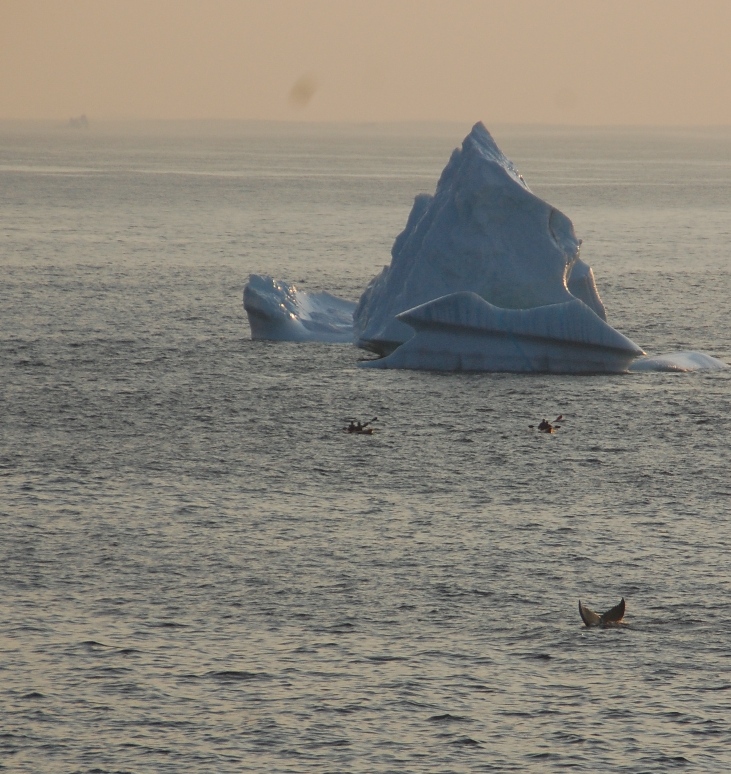
Experiences in Newfoundland are really a nesting egg kind of thing with a causeway leading to an island whose ferry then leads to an even smaller island which, when you get there, makes all that wandering worthwhile. And the most common adjective used around here is magical with places like Twillingate offering both icebergs and whales seemingly within an arm’s reach of shore. Even the time zone, which is a half hour ahead of the Maritimes, has a bit of a Harry Potter quality to it.
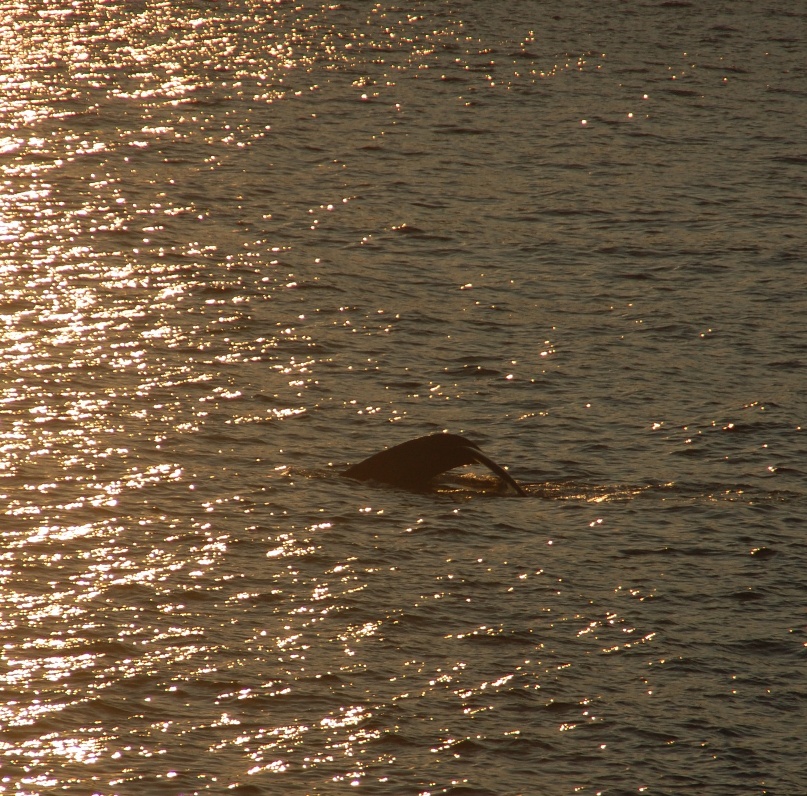
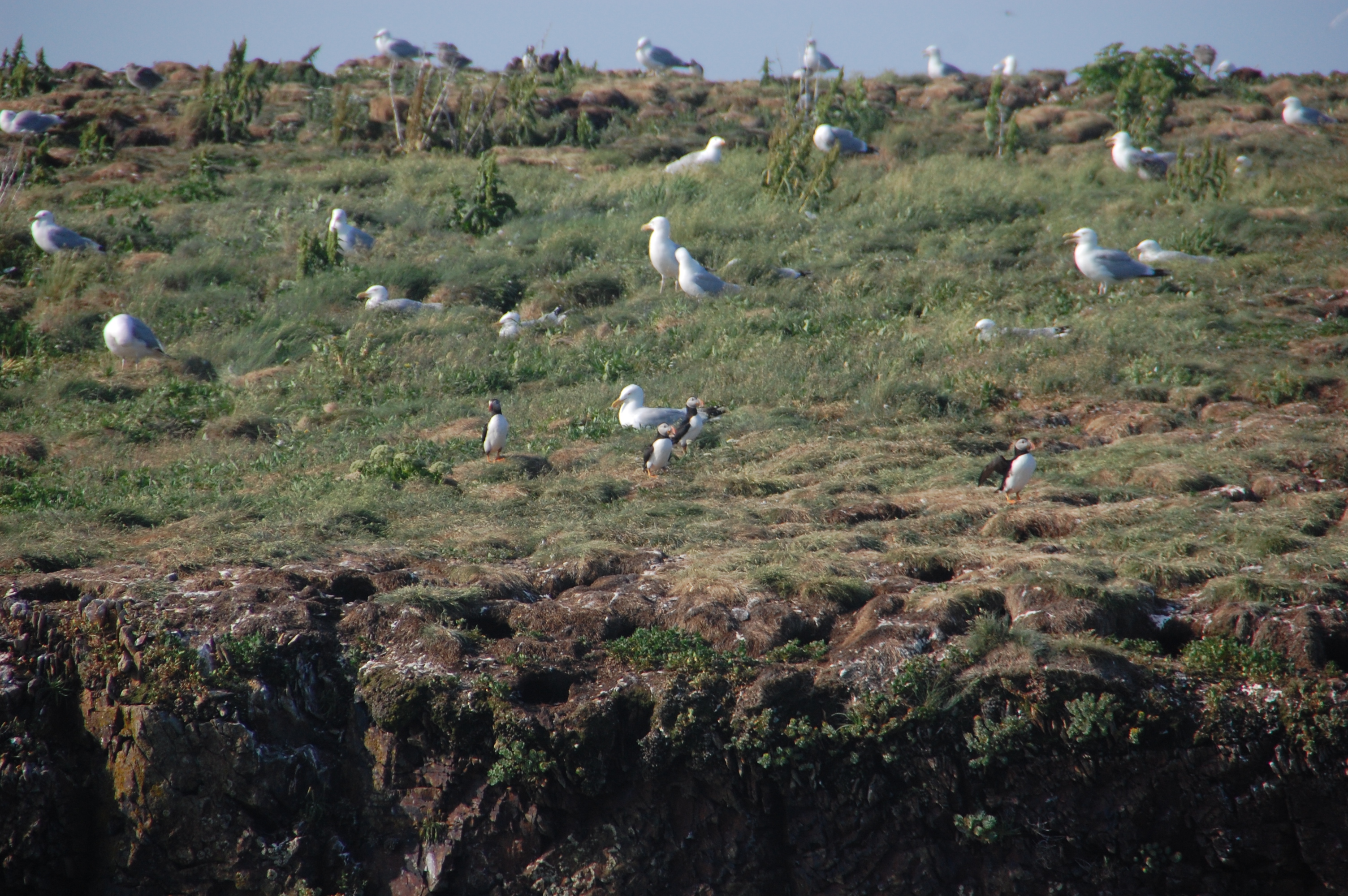
From Twillingate we drove a few hours to Elliston which is known for their root cellars and puffins. The latter hang out an island so close you can almost jump to it. Depending on the time of day, you can either spy them hanging out at their own island or venturing onto the main coast (and then resting a few feet away from yourself). Whales are also common so you might have a bit of dilemma over where to point the camera. Afterwards a beautiful sand beach waits for you to splash around in the waves. Considering the icebergs in the distance, the water really is not that cold.

Making this all the more fun are the over seventy dialects found on the island with many of them able to be traced back to specific hamlets in England, Scotland, and Ireland. This type of linguistic diversity can only be possible if cultivated in isolation and the island offers plenty of that. For our puffin morning, we shared the soft grass cliffs with exactly three other people. At Twillingate, despite the many bed and breakfasts, we were mostly alone when picking up ice on the beach or spying whales from shore. Although easily reached now by good paved roads, they were accessible only by boat up to the mid-1960s. According to an older local, Twillingate did not even have phones until the late 1950s and electricity was not a given anywhere until much later. Tourism for the most part has been slow to gain a foothold on the island and tent camping has been easy with campgrounds filled with new and returning visitors. There is a long tradition here of Americans making friends on the beginning with U.S. servicemen, who were stationed at bases throughout Newfoundland during the World and Cold Wars, returning home with Newfie brides.

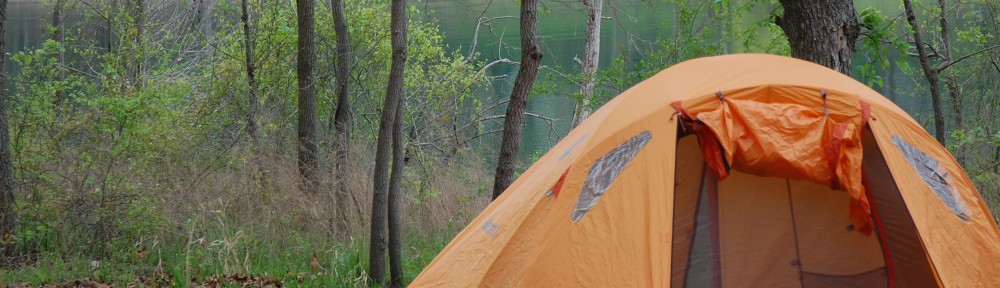
So I sit her now at my campsite a little before seven. Corey and Henna are sound asleep but the strong wind has kept me awake. Last night while setting up camp a strong gust blew the tent up and into a low branch. When we plan these trips we try not to get bogged down in the details. Just pick a direction and go (let the wind take us wherever). It was funny watching our tent do the same. Noel